Nova-CVM

Cleaning Validation Management Software

The industry’s first choice for automated cleaning validation and risk management, Nova-CVM significantly enhances product integrity by managing changes and assessing the risks associated with cross-contamination and product impurities within a dynamic production environment.

Nova-CVM | Cleaning Validation Management Software
Trusted by Quality Teams Worldwide
Unither
Pfizer
Takeda
Sunpharma
Stada
Sanofi
Sanaria
Polpharma
Organon
Merck
Meiji
Medtronic
Medochemie
Lupin
Lantheus
JGL
Hikma
Herbalife
Genzyme
Fresenius
Estee Lauder
Endo Pharma
Emergent
Dial Henkel
Charles River Labs
Boehringer Ingelheim
Baxter
Bavarian Nordic
Amgen
Akrikhin
3M
Virbac
30 years of global installations
Novatek has delivered regulated quality software since 1996.
Built for sterile and non-sterile manufacturing
Supporting aseptic operations, sterility assurance teams, and non-sterile manufacturers.
Implementation and validation support
Deployment, training, integrations, equipment interfacing, and validation documentation.

About the Software

All changes to methods, APIs, products, equipment, and family groups are automatically evaluated to ensure product integrity and regulatory compliance. Nova-Cleaning Validation complies with 21 CFR Part 11 and EU Annex 11. The system uses a risk-based approach and is designed based on PDA Technical Reports 29 and 49, ISPE MaPP, 21 CFR Part 211.67.

Key Benefits

  • Faster than manual processes
  • Data security with 21 CFR 11 Part 11 compliance
  • Reduced errors with a paperless system
  • Efficiency through electronic management and approval of master data
  • System Defined Protocols with automatically generated sampling plans for validation groups
  • Comprehensive reporting enables users to retrieve in-depth standard reports and statistical analysis quickly

Key Features

Computerized worst-case evaluation
  • Risk factors, including dosage, toxicity, cleanability, solubility, and more, can be defined together or separately, allowing the user to control the evaluation settings completely.
  • The worst case is determined and displayed for all validation groups, enabling users to focus on the most significant risk to product quality.
  • The worst-case assessment is automatically triggered when any validation group property is changed.
Fully automated MAC calculations
  • Carryover limits are calculated for all sample points for APIs, cleaning agents, and microbial testing.
  • Hundreds of MAC/MSC formulas are executed in seconds rather than hours.
  • The calculations consider all possible product A and B combinations for the affected equipment trains and validation groups.
  • The lowest MAC values are highlighted, making user review of the calculated values quick and easy.
Process-dedicated change evaluation feature.

Consolidates the impact of multiple changes in one snapshot of the risks and consequences of potential changes to any factor that may affect the validated state of the cleaning process, including: Changing equipment, Introducing new products, Modifying batch sizes and anything related to the product and equipment families that are part of equipment trains and validation groups

Frequently Asked Questions

Currently, the regulatory thinking for MACO limits includes the health-based limit calculations (HBELs) using acceptable or permitted daily exposure (ADE/ PDE). ADE and PDE values are calculated based on scientifically sound toxicological data and incorporate a risk-based approach to derive their values.

Where applicable, one should perform MACO for Active Pharmaceutical Ingredients, microbial residue, cleaning agent residue, and disinfectants.

While ubiquitous and incredibly useful as a business tool, spreadsheet software was never intended for cleaning validation data and advanced MACO calculations. Spreadsheets and spreadsheet tools have no built-in compliance, data integrity, or formula validation features. Although some companies have used such spreadsheets to calculate cleaning validation limits, it is considered a workaround and can never replace a software system dedicated to the cleaning validation process.

Using a dedicated cleaning validation software product that adheres to Data Integrity and 21 CFR Part 11 regulations is more suitable as it is flexible enough to calculate hundreds of risk factors simultaneously and provide the worst-case scenarios.

The worst-case product is determined using the product's properties and the API in the product. The first measure of the worst case is toxicity based on daily exposure; the lower the PDE, the more toxic the product is. The worst case also considers physical properties like solubility in water, solubility in other solvents, or cleanability.

It is possible to use a simple calculation to obtain a risk score by assigning the toxicological data into ranges, solubility, and other physical properties into risk ratings and then giving a weighting to each criterion.

The risk-based worst-case analysis considers the risk associated with every factor and chooses the worst case among several options. Sometimes hard-to-reach equipment, hard-to-clean surface, or a non-soluble API may be worse than toxicity, so one needs to evaluate all types of risks and scientifically choose the worst-case scenario. Finally, the worst-case method should also consider the potent and non-potent products when determining the marker compound.

There are different approaches for calculating the MACO values on the batch level. The last equation below uses the toxicological data to calculate the MACO value. The industry is transitioning from MACO to MSC, representing the maximum safe carry-over.

In the PIC/S PI 006-01 Guidelines, the following statements are made regarding the definition of limits.

Carry-over of product residues should meet defined criteria, for example the most stringent of the following three criteria:

a) No more than 0.1% (1/1000th) of the normal therapeutic dose of any product will appear in the maximum daily dose of the following product.

b) No more than 10 ppm of any product will appear in another product.

c) No quantity of residue should be visible on the equipment after cleaning procedures are performed.

In the last 10 years the dose-based calculation (e.g., 1/1000th dose) has prevailed in the manufacture of pharmaceutical products. Where dose data are not available, an absolute value (e.g., 10 ppm) is prescribed.

For residues where dose data are not available but toxicological data are (e.g. tensides), it is normal to perform the calculation based on the NOEL/ADI (no effect level/acceptable daily intake) value along with a safety factor (SF).

Cleaning limits are calculated on the batch level, but they also need to be calculated at the sample point level so the results for samples collected for cleaning validation and interim monitoring events after cleaning operations can be compared to these limits to confirm that the cleaning process is effective. These equations use the shared and are and the sample point area, as well as the recovery factor of the sampling method to calculate the MAC limits per sample point.
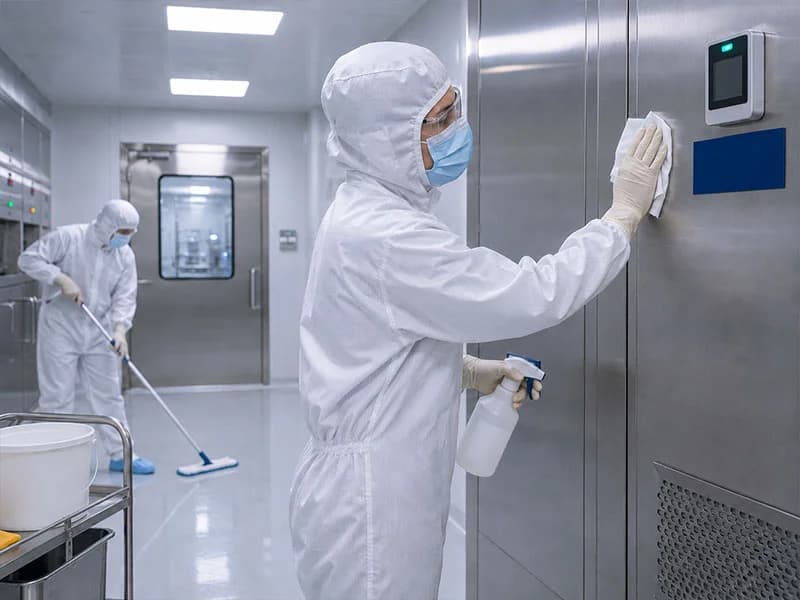

Maximum Allowable Carryover (MAC) and MACO mean virtually the same thing. The difference is that the MACO acronym splits the C into two words, resulting in Maximum Safe Carry Over. No matter which acronym is used, the meaning is the maximum allowable carryover of contamination of a previous product, cleaning agent, or any residue into the subsequent product manufactured on the same equipment.

Over time, as the industry has evolved, subject matter experts have asked, “Who is allowing this allowable carryover? Shouldn’t we use science to determine the Maximum Safe Carryover (MSC) level instead of what is allowed?”

This new risk-based approach to cleaning validation uses Health-Based Exposure Limits (HBELs) and the latest techniques to provide companies with the means to effectively clean, to confirm MSC is not exceeded, and to ensure product quality and patient safety.

Less work, faster results

Each Novatek software solution can be implemented as a standalone module or an integrated system complementing Nova-LIMS, your existing LIMS, or ERP/MES systems. Available interfaces to software and equipment and cloud deployment options available.

Ready to Get Started?

Automate risk-based evaluations and MAC [8.1]calculations, all in real-time. Contact Novatek today.